About Us
The argument in favor of using filler text goes something like this: If you use real content in the Consulting Process, anytime you reach a review point you’ll end up reviewing and negotiating the content itself and not the design.
F-7 Retirement Planning: Managing the Transition from Legacy MiG-21 Derivatives
F-7 Retirement Planning: Managing the Transition from Legacy MiG-21 Derivatives
F-7 Retirement Planning: Managing the Transition from Legacy MiG-21 Derivatives
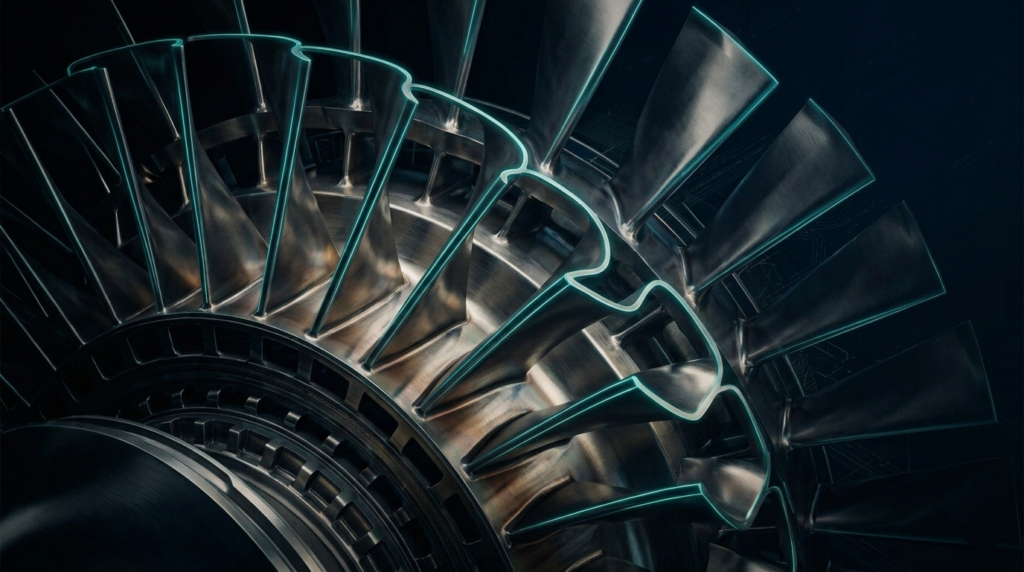
The Chengdu F-7 and J-7 family are Chinese-produced derivatives of the Soviet MiG-21, still in service with multiple air forces after more than five decades of production. As structural age and parts availability combine to make continued operation increasingly difficult, operators face a transition challenge that requires structured planning well before the retirement date arrives.
A Platform at the End of Its Service Life
The Chengdu F-7 and J-7 family trace their lineage directly to the Soviet MiG-21 Fishbed, a delta-wing interceptor that first flew in 1956. Chinese-produced variants entered service with the People’s Liberation Army Air Force in the 1960s and were subsequently exported to multiple allied air forces through the Cold War period and beyond. The final production examples were delivered in the early 2010s. As of 2026, airframes delivered in the 1980s and early 1990s are approaching or have exceeded their designed structural service lives.
The operational implications are well documented. The WP-13 engine that powers most variants is an ageing turbine whose overhaul demands become more intensive as the engine accumulates cycles. Original instrument systems have become increasingly difficult to support as the manufacturers of 1970s and 1980s era analogue avionics components have ceased production. And structural inspection requirements increase with age, adding maintenance burden and reducing availability rates.
The Safety Imperative
The risks associated with operating elderly airframes on inadequate parts support are not theoretical. A crash involving an F-7 family aircraft in July 2025 during a training sortie caused severe casualties among civilians in a densely populated area. The investigation pointed to factors related to the platform’s age and the constraints of maintaining it in airworthy condition at this stage of its service life. Air forces still operating F-7 fleets need to make an honest assessment of their maintenance infrastructure, their parts supply chain, and their structural inspection programs against the airworthiness standard the platform requires.
What Operators Need Before Retirement
A managed F-7 retirement has three practical requirements. The first is a bridging parts supply that keeps the fleet airworthy through the transition period without compromising standards. WP-13 engine components, hydraulic system parts, structural items, and avionics line-replaceable units all need to be sourced and certified for the remaining service period. The second is a training pipeline that continues producing pilots capable of transitioning to the replacement type. The K-8W Karakorum advanced jet trainer, which typically serves as the lead-in training aircraft for F-7 operators, must be kept airworthy and properly supported throughout this period.
The third requirement is a simulator that allows currency training and emergency procedure practice to continue at reduced cost to the live-flying fleet. Every hour spent in a simulator is an hour of WP-13 engine life preserved. For a fleet approaching retirement, this arithmetic is significant.
The K-8W: Supporting the Training Foundation
The Hongdu K-8W advanced jet trainer is powered by the Honeywell TFE731 turbofan, a reliable Western powerplant with a strong commercial support network that does not depend on Chinese government export decisions. Honeywell and its authorised service network provide TFE731 support globally through compliant channels. The K-8W airframe components are sourced through HAIG and its authorised distributors. Nortrane sources across both supply chains for K-8W operators, keeping the training fleet airworthy through the transition window.
How Nortrane Supports F-7 Operators
Nortrane provides structured procurement support across three areas. We help operators source WP-13 engine components and F-7 airframe parts through verified channels, qualifying suppliers and confirming traceability documentation. We support sourcing of K-8W TFE731 engine parts and airframe components to keep the training fleet flying. And we advise on simulator procurement for the K-8W and for any replacement type being evaluated, helping the air force build a training infrastructure that supports the transition rather than lagging behind it.
“The F-7 fleet transition is not a future problem for most current operators. It is a present one. The air forces that manage it well are the ones that began planning their bridging parts supply and training pipeline well before the retirement date was formally announced.”
