
About Us
The argument in favor of using filler text goes something like this: If you use real content in the Consulting Process, anytime you reach a review point you’ll end up reviewing and negotiating the content itself and not the design.
Military Flight Simulator Procurement: A Practical Guide for F-7, F-16, Kfir, Hawk and C-130 Operators
Military Flight Simulator Procurement: A Practical Guide for F-7, F-16, Kfir, Hawk and C-130 Operators
Military Flight Simulator Procurement: A Practical Guide for F-7, F-16, Kfir, Hawk and C-130 Operators
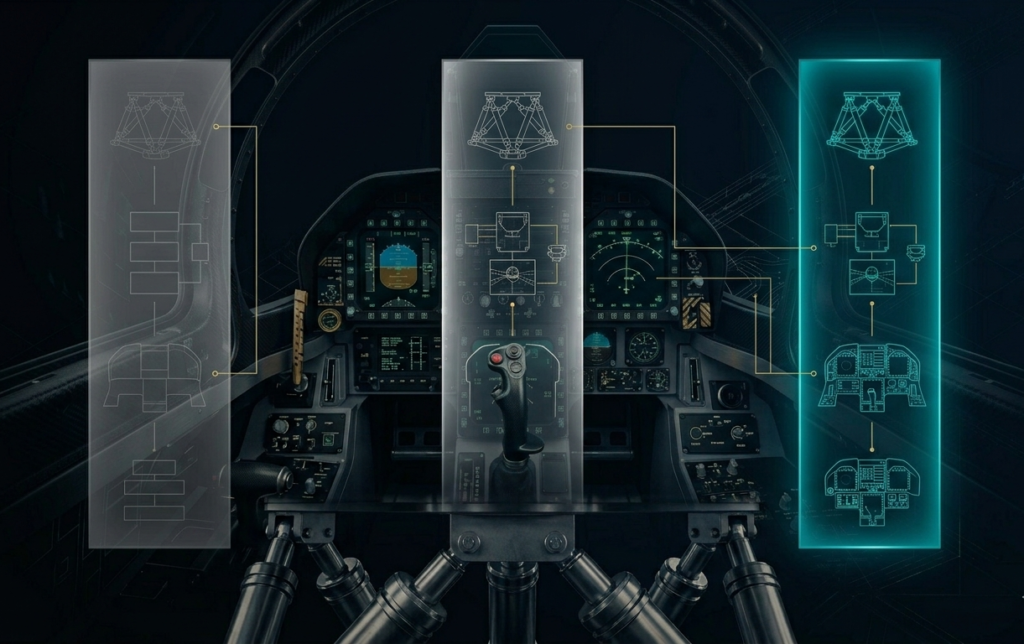
A full-mission flight simulator generates high-value training for a fraction of the cost of live flying hours. Yet air forces consistently over-specify or under-specify when procuring them, and then pay for that decision throughout the simulator’s twenty-year service life. This guide explains what to buy, what to specify, and how to structure the contract.
Why Simulators Are Not Optional
A single flight hour in a combat aircraft represents significant cost when you account for fuel, engine cycles consumed, airframe wear, and the maintenance burden that follows every sortie. A flight simulator, once procured and installed, delivers training hours at a fraction of that ongoing expense. The economics favour simulation strongly, and they are particularly compelling for air forces where the overall fleet is small and every flight hour puts measurable wear on a platform that cannot be easily or quickly replaced.
For an air force operating a fleet of ten to twenty aircraft, simulator investment pays back through avoided aircraft operating costs over a period of years, and that calculation does not account for the safety benefit of training emergency procedures, dangerous manoeuvres, and complex weapons delivery profiles in an environment where a mistake ends a training session rather than an aircraft and a pilot. The question for procurement officers is not whether to buy a simulator. It is which fidelity level to specify, which vendor to select, and how to structure the contract so that the simulator remains useful and maintainable for its entire service life.
Simulator Classifications: What Operators Actually Need
Military flight simulators are classified by their level of fidelity. Procurement officers in resource-constrained environments tend to make one of two mistakes. The first is over-specifying, buying a full-motion simulator when a fixed-base system would achieve all training objectives at lower cost. The second is under-specifying, buying a procedures trainer that cannot replicate the combat systems needed for weapons qualification, which means crews still have to fly live sorties for training that should have been done in the simulator.
- Cockpit Procedures Trainer: A fixed cockpit replica with accurate systems simulation but no motion or visual display. Appropriate for initial type familiarization, emergency procedures, and systems training on aircraft with small fleets such as the Kfir. This level builds the procedural knowledge that allows pilots to operate the aircraft systems correctly without putting the actual aircraft at risk.
- Weapons Systems Trainer or Fixed-Base Full Mission Simulator: A full cockpit with an accurate wide-angle visual system, radar simulation, and weapons delivery simulation, but without a motion platform. This is the most practical level for most air forces operating fleets of twelve or more aircraft. It supports all combat training including beyond-visual-range missile employment, radar operation, and electronic warfare. This is what operators of the F-16, F-7, Kfir, and Hawk require as a minimum.
- Full Mission Simulator with Motion: Full cockpit, wide field-of-view visual system, and six-axis motion platform. This level is justified for large fleets or particularly high-workload platforms like the C-130. It delivers the physical cues that allow proper emergency procedure training, particularly for engine failures and crosswind operations.
Specifying the Right Simulator: The Details That Matter
The specification document is where simulator procurement succeeds or fails. Vendors will respond to vague specifications with proposals that appear compliant but do not deliver the training capability the air force needs. Four elements must be specified precisely. The threat library must name the specific radar types and missile systems the simulator is required to replicate in detail. Generic language gives vendors freedom to deliver a system that cannot train crews against actual threats. The visual database must cover the specific geographic areas and terrain types where the air force operates. Annual database update obligations must be contractually specified so the simulator remains operationally relevant throughout its service life. And local maintenance provision must be required, including technology transfer sufficient for air force technical staff to perform first and second-level maintenance without calling the OEM’s technicians.
C-130 Simulators: The Case for Level D
The C-130 Hercules is operated by more than seventy nations, and a significant proportion of those operators are flying on Level B or Level C simulators that were procured many years ago. These devices no longer replicate the full operational environment that C-130 crews face in service. A Level B or Level C simulator provides a fixed-base cockpit environment with basic visual and instrument simulation. Neither provides the six-degree-of-freedom motion platform that allows proper training for turbulence, engine failures, and the physical cues that emergency procedures require. Modern Level D simulator technology is more compact and more maintainable than previous-generation devices. An operator approaching the out-of-service date of a Level B or Level C device has a viable upgrade path to Level D that should be part of any long-term training equipment plan.
How Nortrane Supports Simulator Procurement
Nortrane provides two specific services in simulator procurement programs. The first is specification development, working with air force training staff to translate operational requirements into a procurement specification that vendors cannot misinterpret. This is the most valuable intervention point because the specification determines everything that follows. The second is vendor qualification and evaluation support, helping the procurement team assess proposals against the specification, conduct factory acceptance tests, and verify that the delivered system performs what was promised before final payment is released.
“The simulator specification document determines whether the procurement succeeds. A well-written specification prevents years of frustration with an under-performing system. A vague specification is an invitation for vendors to propose what they already have rather than what the air force actually needs.”
