About Us
The argument in favor of using filler text goes something like this: If you use real content in the Consulting Process, anytime you reach a review point you’ll end up reviewing and negotiating the content itself and not the design.
AH-1 Cobra Life Extension: Avionics Upgrades, Parts Support and What Global Operators Need to Know
AH-1 Cobra Life Extension: Avionics Upgrades, Parts Support and What Global Operators Need to Know
AH-1 Cobra Life Extension: Avionics Upgrades, Parts Support and What Global Operators Need to Know
The Bell AH-1 Cobra is the world’s first purpose-built attack helicopter and it is still flying combat missions today. Operators across the Middle East, Asia, and Europe hold fleets of AH-1F and AH-1S variants that are structurally sound but flying on avionics from the early 1980s. A proven upgrade path exists, backed by a completed operational program, and the parts supply chain for this platform is navigable for operators who understand it.
The Cobra Still in Service, Still Needed
The Bell AH-1 Cobra entered service with the United States Army in 1967 and became the first dedicated attack helicopter in history. Over the following decades it was exported widely, and today the AH-1F and AH-1S variants remain in active operational service with air forces and army aviation units across the Middle East, East Asia, and South Asia. The platform’s slender profile, tandem seating, and weapons pylons remain operationally relevant. What has not kept pace is the avionics suite.
The AH-1F as delivered carries an analogue cockpit dating from the early 1980s. The original television sight unit provides limited targeting capability compared to modern electro-optical and infrared systems. The navigation system is basic. The communications architecture lacks encrypted digital capability. And the entire avionics suite creates higher crew workload than modern systems require. For operators committed to keeping their Cobra fleets in service through the 2030s and beyond, upgrading the avionics is not a luxury. It is the operational and economic logic of the platform.
The Northrop Grumman and SES Upgrade: A Proven Template
The most significant AH-1F avionics upgrade completed to date was executed by Northrop Grumman and Science and Engineering Services for a Middle Eastern air force operating a fleet of AH-1F and AH-1S Cobras. This program is now the benchmark for any operator evaluating what a properly executed Cobra avionics upgrade delivers.
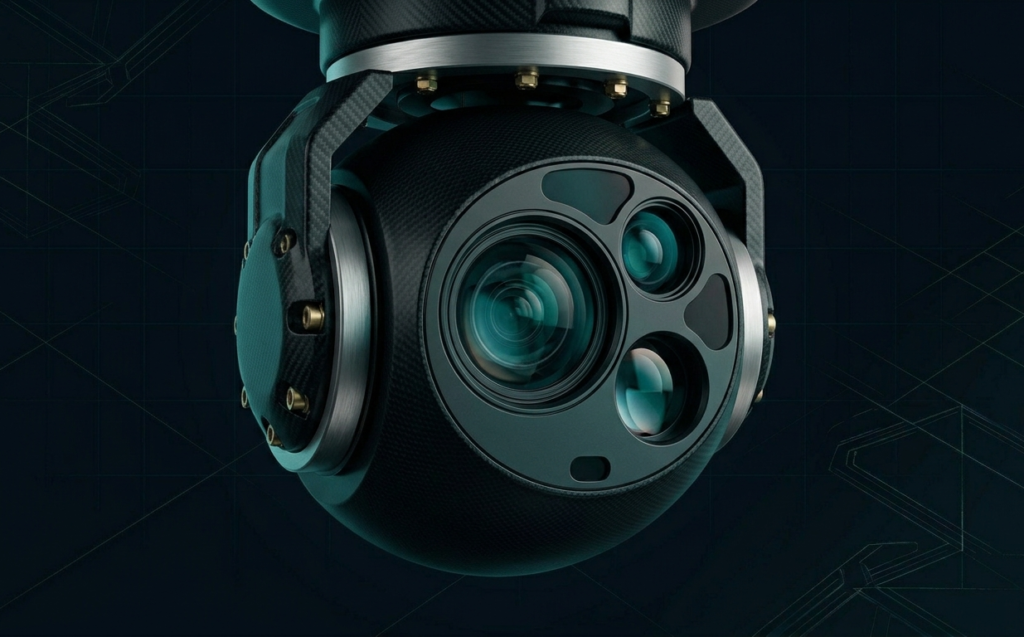
The upgrade installed Northrop Grumman’s Integrated Avionics System, the same avionics suite found in the current-production AH-1Z Viper. The cockpit received large flat-panel multifunction displays from L3 Technologies replacing the original analogue instruments. The navigation system was replaced with the LN-251 inertial navigation system using a fibre-optic gyroscope, providing GPS-accurate positioning without GPS dependency. An L3 Wescam MX-15D electro-optical and infrared turret replaced the original television sight unit, giving the aircraft a genuine day and night precision targeting capability. New weapons integration was added for AGM-114 Hellfire missiles and APKWS laser-guided rockets. Defensive systems including missile approach warning and chaff and flare dispensers were installed. The rewiring and reconditioning program reduced the aircraft’s weight by approximately 136 kilograms compared to its pre-upgrade configuration. The net result is an aircraft whose avionics and weapons capability are broadly comparable to the current-production AH-1Z, at a program cost that is a fraction of new-build procurement.
Flight testing of the first upgraded aircraft was completed at Northrop Grumman’s Huntsville facility and the aircraft was returned to the operator for final acceptance testing and weapons qualification. This program established that the AH-1F/S upgrade is technically validated and repeatable for any operator of the same variant.
What the Upgrade Changes Operationally
Before the upgrade, an AH-1F crew operating at night or in degraded visual conditions is relying on the original FLIR capability of the M65 TOW sight, which has limited resolution and range compared to modern systems. Target identification at tactically useful ranges is difficult. Weapons employment requires the aircraft to approach closer to the target than a modern EO/IR system would require. Navigation in complex terrain relies on the crew’s visual reference and the basic navigation instruments rather than a digital moving map.
After the upgrade, the MX-15D turret provides high-resolution day and night targeting at standoff ranges. The LN-251 navigation system feeds a digital moving map in the cockpit. The crew can receive and transmit digital mission data. Hellfire missiles and guided rockets can be employed with precision. The aircraft’s defensive systems provide warning of threats that the original configuration cannot detect. The operational difference is not marginal. It is the difference between a 1980s platform and a platform that competes effectively in the current threat environment.
The Parts Supply Chain: T53 Engine and Airframe
The AH-1F is powered by the Lycoming T53-L-703 turboshaft engine producing 1,800 shaft horsepower. The T53 is a mature engine with a significant installed base across the Cobra family and the Bell UH-1 Huey, which shares the same powerplant. Engine parts are available through Honeywell Aerospace, which acquired Lycoming’s military turbine business, through licensed repair stations, and through certified surplus channels. The key consideration for operators is that T53 overhaul requires a qualified repair facility, and the number of facilities authorised to perform T53 overhaul work has declined as the type ages. Identifying and qualifying a compliant repair station before an engine reaches its overhaul due date is a procurement action, not a maintenance action, and it should be treated accordingly.
Airframe components present a more varied picture. Rotor blade sets, transmission components, hydraulic system parts, and the M197 three-barrel 20mm cannon system and its associated electrical and hydraulic drive components all have finite service lives and require sourcing from qualified vendors. The cannon system in particular requires careful attention because the M197 is a military-specific weapon system with a supply chain that runs through US defence channels and is subject to ITAR controls. Every component sourced through Nortrane carries full traceability documentation.
The Philippines Warning: What Happens Without Proper Parts Support
The Philippines retired its AH-1S Cobras from active service in December 2024 after a period of reduced availability driven primarily by the difficulty of obtaining serviceable parts through compliant channels. This is the most direct available example of what happens when an operator allows the parts supply chain to deteriorate without building alternative sourcing relationships. The platform itself was airworthy. The supply chain was not structured to sustain it. The lesson for current AH-1 operators is that building a robust, compliant parts supply chain is not a problem that can be deferred until availability rates fall. It must be addressed while the fleet is still operationally active.
Software and Systems Updates
For operators who have already completed or are planning a modern avionics upgrade, software is a recurring support requirement that the procurement contract must address explicitly. The fire control system software that governs weapons employment parameters, threat library updates for the defensive aids suite, navigation database currency, and the avionics system’s built-in test and diagnostic software all require periodic updates to remain operationally current. Northrop Grumman’s baseline upgrade architecture was specifically designed to allow rapid software-only updates as an alternative to hardware replacement, which significantly reduces the cost and time required for capability refreshes. This is one of the upgrade program’s most practically valuable features, and operators should ensure that software update obligations and their associated costs are fully specified in any upgrade or support contract.
How Nortrane Supports AH-1 Operators
Nortrane helps AH-1F and AH-1S operators procure T53 engine components, rotor system parts, airframe line-replaceable units, and cannon system components through verified, compliant channels, qualifying suppliers and confirming traceability and compliance documentation for every component. We advise on the export authorization that US-origin parts require so the operator moves through procurement without compliance surprises. For operators evaluating the Northrop Grumman and SES avionics upgrade or a comparable program, we provide independent technical advisory and contract structure support, helping the operator enter the program with realistic milestones, proper acceptance criteria, and protection against schedule and cost overruns.
“The AH-1 Cobra is one of the most upgradeable platforms in the global attack helicopter inventory. The operators who will still be flying it effectively in 2035 are the ones who structured their avionics upgrade and parts supply chain properly in 2025 and 2026, not the ones who waited.”
